
A year after Nassim Taleb popularized the term, the 2008 financial crisis happened as a perfect example of what black swan events are: unpredictable, outsized consequences, and inevitable in retrospect.
Interestingly, one man had predicted that the U.S. housing bubble would burst and that mortgage-backed securities (MBS), the financial innovation that defined this era, would collapse. What many considered a black swan event had been predicted by Michael Burry, a hedge fund manager who made over $800 million for himself and his clients, according to Moneywise, a financial news platform.
Since this ‘big short,’ many investors have paid attention to Michael Burry’s predictions, including his more recent prediction of an AI bubble burst.
However, not all of his predictions have been as accurate as the ‘big short.’ While Burry has proven to be a spectacular investor, he is far from being an oracle. Instead of taking his every word prediction as inviolable, investors will be better served by understanding his investment philosophy and drawing the right lessons from it.
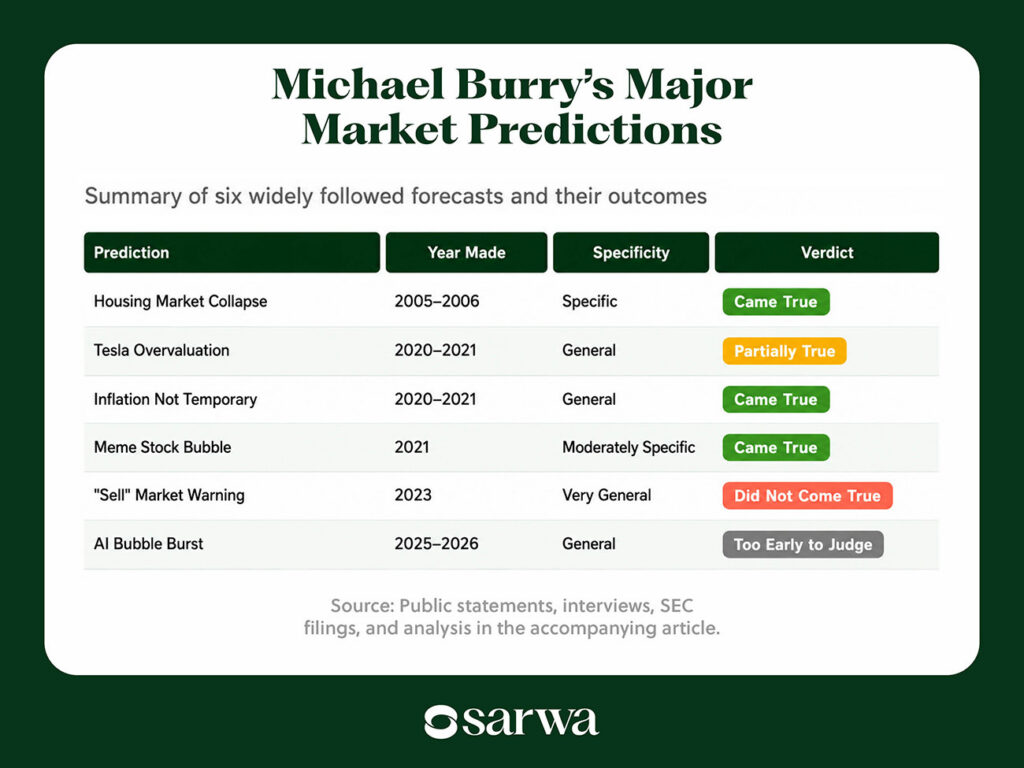
In what follows, we look at 6 of Michael Burry’s predictions, how they panned out, and the lessons you can take from them.
We’ll cover:
- Who is Michael Burry?
- Evaluation of 6 Michael Burry predictions
- What retail investors can learn from Michael Burry and his predictions
Do you want to learn more about how great investors like Michael Burry and Warren Buffett interpret the global economy to identify investing opportunities? Subscribe today for Sarwa’s Fully Invested newsletter for regular updates.
1. Who is Michael Burry?
The beginnings of a legendary investor
Michael Burry founded his hedge fund, Scion Capital, in 2000 after he transitioned to a career in finance as a licensed physician in California.
Scion Capital took off with Burry’s personal funds and loans from his family members. His early strategy was to short overvalued technology stocks (including Amazon) during the dot-com bubble of the early 2000s. This was the beginning of what would come to be a huge reputation as a contrarian investor who does not ‘go with the flow.’
The big short
This contrarian approach would become more pronounced during the subprime mortgage crisis in the US. Burry was one of the first investors or financial experts to identify the instability in subprime MBSs. He responded to this by betting against the housing market, using credit default swaps (CDSs).
Following the housing market crash, Burry made over $800 million for himself and his investors. These moves would cement his place as a legendary investor in the annals of investment history.
His popularity was enhanced when Michael Lewis published the book The Big Short: Inside the Doomsday Machine, which explored how Michael Burry, Steve Eisman, and Greg Lippmann foresaw the housing market collapse and profited from it.
The book would go on to become a bestseller. It was also adapted into an Oscar-winning movie by the same title in 2015, with Christian Bale acting as Michael Burry.
Scion Capital, then and now
Burry closed Scion Capital in 2008 and reopened the firm as Scion Asset Management.
However, in November 2025, Burry announced the closure of his hedge fund and the launch of a Substack newsletter – Cassandra Unchained – where he would share his thoughts on the financial markets.
Investment philosophy
Burry’s investment decisions are marked by certain commonalities:
- Contrarian investing: Burry avoids herd mentality, preferring to follow his convictions about specific assets and markets. He also gained a penchant for investing in unpopular sectors (including infrastructure, agriculture, and prison operators’ stocks), rather than those sectors where investors and analysts have a buy consensus. This is because he believes consensus often leads to overvaluation.
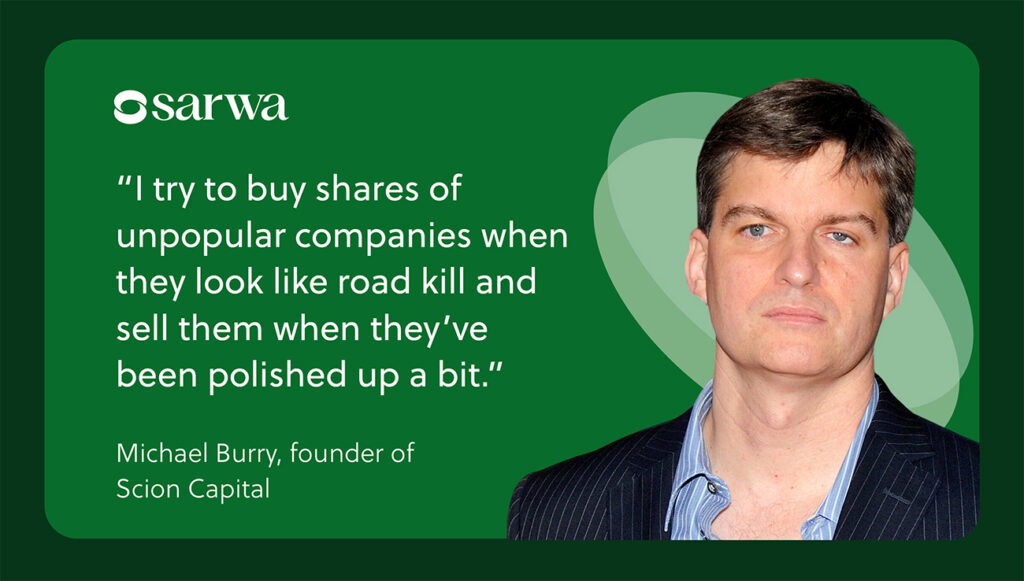
“I try to buy shares of unpopular companies when they look like road kill and sell them when they’ve been polished up a bit,” he said.
- Value investing: When Burry shorted dot-com stocks in the early 2000s, it was because he believed those stocks were overvalued in comparison to their intrinsic value. Burry prefers to buy undervalued stocks and short overvalued ones. He could do this because he does not act based on market sentiment or hype but on fundamental value.
“As my moniker implies, I’m a value investor, a pretty deep one,” he once said. “Yet while my influences are traditional, I’ve developed my own version of value investing. This version has been tuned empirically with a singular goal: to maximize risk-adjusted returns.”
- Deep fundamental research: As a value investor, Burry pays close attention to company filings, industry data, and economic trends. He prefers to do his research instead of relying on analysts’ calls.
- Asymmetric trading: Like Taleb, Burry believes in finding those trades with limited downside but massive upside. If he had been wrong about the housing market, the downside on the CDSs he bought was limited. But, as we have seen, the upside was indeed massive.
- Long-term patience: Though he is well known for shorting stocks, Burry is also willing to hold investments through periods of volatility if his underlying thesis remains intact. He has often emphasized that markets can stay irrational longer than investors expect, making patience an important part of his strategy.
No wonder Michael Burry’s portfolio included stocks like Geo Group and CoreCivic (two prison operators) that he held for around two years based on his belief that the market had mispriced them.
2. Evaluation of 6 Michael Burry predictions
If a man could predict what would later be classified as a black swan event, then it makes sense for investors to be on guard for his other predictions.
After the big short, Burry made other predictions about the financial markets, with the latest being an AI bubble burst.
But how have these predictions fared?
In what follows, we will consider six of Burry’s predictions and how they played out (or are playing out).
But first, some words about methodology.
An overview of our methodology
We will follow a four-step framework when evaluating Burry’s predictions.
- Identify a publicly verifiable prediction: To avoid including hearsay, we will stick to predictions that can be verified in the public domain: SEC filings from Scion Asset Management, interviews, news reports from reputable platforms, conference appearances, (now deleted) posts from his Twitter handles, or published investor letters.
- Classify predictions based on specificity: Predictions can be broad or specific. Since we can’t judge a broad prediction the same way as a specific (or ultra-specific) prediction, we will need to know what we are dealing with.
- Record the timing of the call: To know if a prediction came true, we must have verifiable timelines. We will try to establish the time the prediction was given and verify that it was not the case of ‘prediction after the fact.’
- Compare the prediction with subsequent events: We will examine relevant market data to verify if the prediction came true or not. The more specific the prediction, the more we pay attention to minute details when evaluating the prediction.
- Issue a verdict: Given that not all of Burry’s predictions are ultraspecific, we cannot limit our verdicts to “came true” and “didn’t come true.” Instead, there will be a third category (“partially came true”) to describe when the broad outlines of a prediction came true, even if other minor (specific) details did not.
Let’s see how this methodology plays out by considering 6 of his most popular predictions.
Prediction 1: The housing market collapse
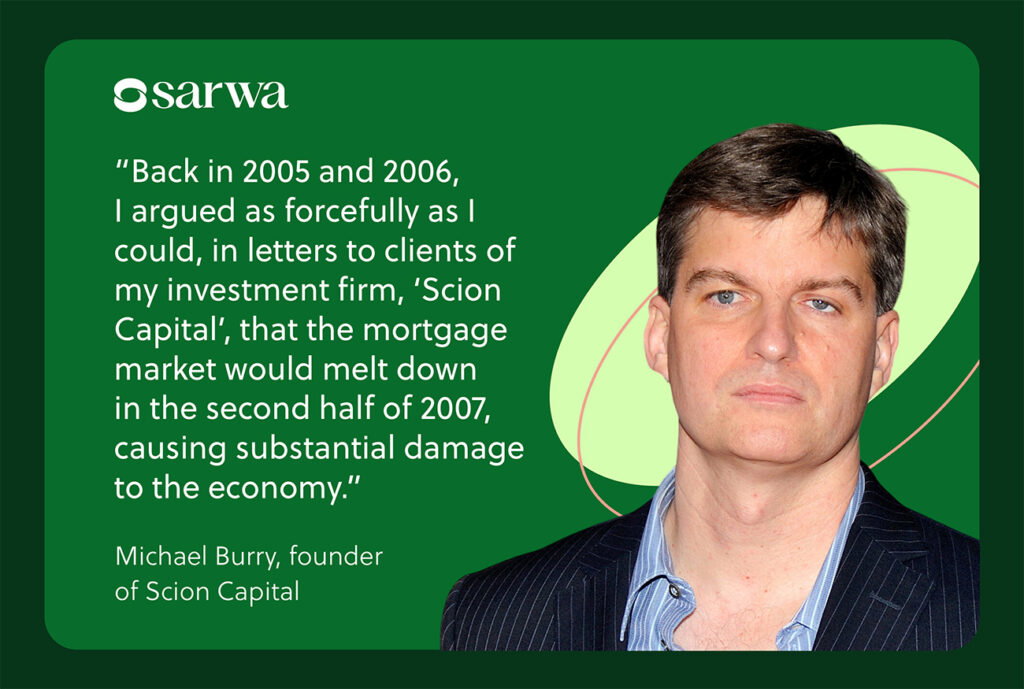
- The prediction: “Back in 2005 and 2006, I argued as forcefully as I could, in letters to clients of my investment firm, ‘Scion Capital’, that the mortgage market would melt down in the second half of 2007, causing substantial damage to the economy,” he said in an Opinion Piece on The New York Times.
A look into some of these letters shows that Burry was confident that the subprime mortgages were inefficient. He was already shorting the residential real estate market as early as 2005, even though he believed that the bulk of the benefit would come much later.
Below is an example of his statements that prove that he expected a mortgage market meltdown in the second half of 2007:
“Since the Funds shorted mortgage pools mostly originated in spring through late summer 2005, I expect the pools shorted will see maximum stress during the latter half of 2007,” he said in a November 7, 2006, letter to investors in Scion Capital.
Again:
“Recently, the Dow Jones Industrials have scaled all-time highs. But the fundamentals on those positions we are short are rapidly deteriorating, and during 2007, the reward for our patience should be made clear in the Funds’ performance.”
- Specificity: Burry expected the meltdown in the housing market to happen in the second half of 2007. He also anticipated broad economic impacts beyond the financial market itself.
- Timing: His predictions came in 2005 and 2006, about one to two years before the event they predicted.
- Subsequent events: Burry was right. The meltdown of the mortgage market did happen in 2007, and the effects spiralled to the general economy.
“In 2007, losses on mortgage-related financial assets began to cause strains in global financial markets, and in December 2007, the US economy entered a recession,” according to the US Federal Reserve. “That year, several large financial firms experienced financial distress, and many financial markets experienced significant turbulence.”
This was the beginning of a series of events that defined the Great Recession of 2008/2009.
- Verdict: Burry’s prediction came true.

As we have said above, the accuracy of his predictions of the housing market collapse propelled him into the limelight.
“Michael Burry’s most significant accurate prediction was identifying the risks in the U.S. housing market before the 2008 financial crisis,” according to Austin Rulfs, the founder of Zanda Wealth, a mortgage brokerage firm.
Prediction 2: Tesla’s overvaluation won’t last
- The prediction: Between 2020 and 2021, Burry made some comments regarding Tesla’s overvaluation and his expectation that a correction was in the offing.
In December 2020, he mentioned, in a tweet, that he was short TSLA:
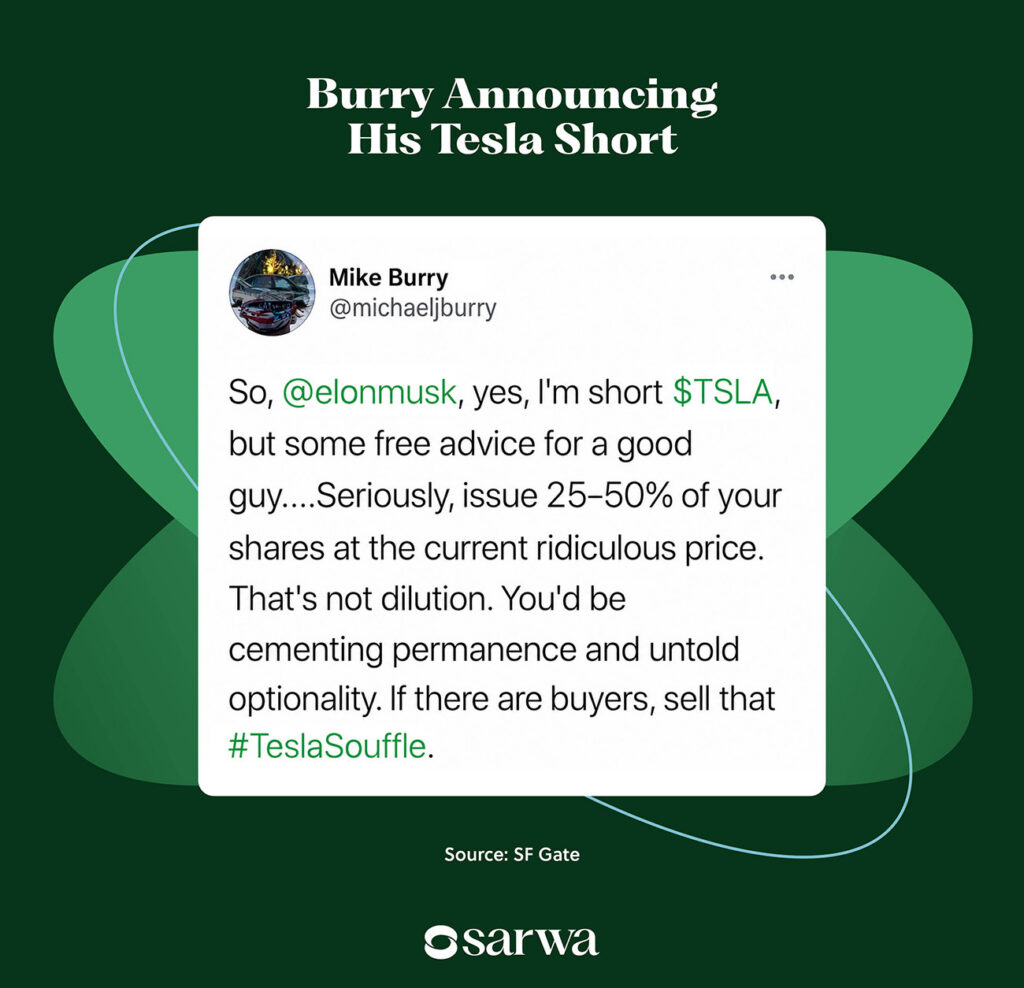
Source: SF Gate
According to SF Gate, a news platform, he also tweeted this in February, 2021:
“My last big bet is getting bigger and bigger. Only today Tesla increased its capitalization by 60,000 million dollars, which is equivalent to one GM, two Hershey’s, three Etsy, four Domino’s, and 10 Vornadoes. Enjoy it while it lasts.”
A look at Scion Capital’s filings with the SEC also showed that he held put options for 800,100 Tesla shares in 2020.
- Specificity: This was a generic expectation of a market correction with no indication of time (when it will happen) or volume (by how much).
- Timing: While Burry’s bet on Tesla came in 2020, his more specific statement about an expected correction was made in February 2021.
- Subsequent events: The chart below shows that TSLA experienced a 36% price drop between January 26 and May 19, 2021:
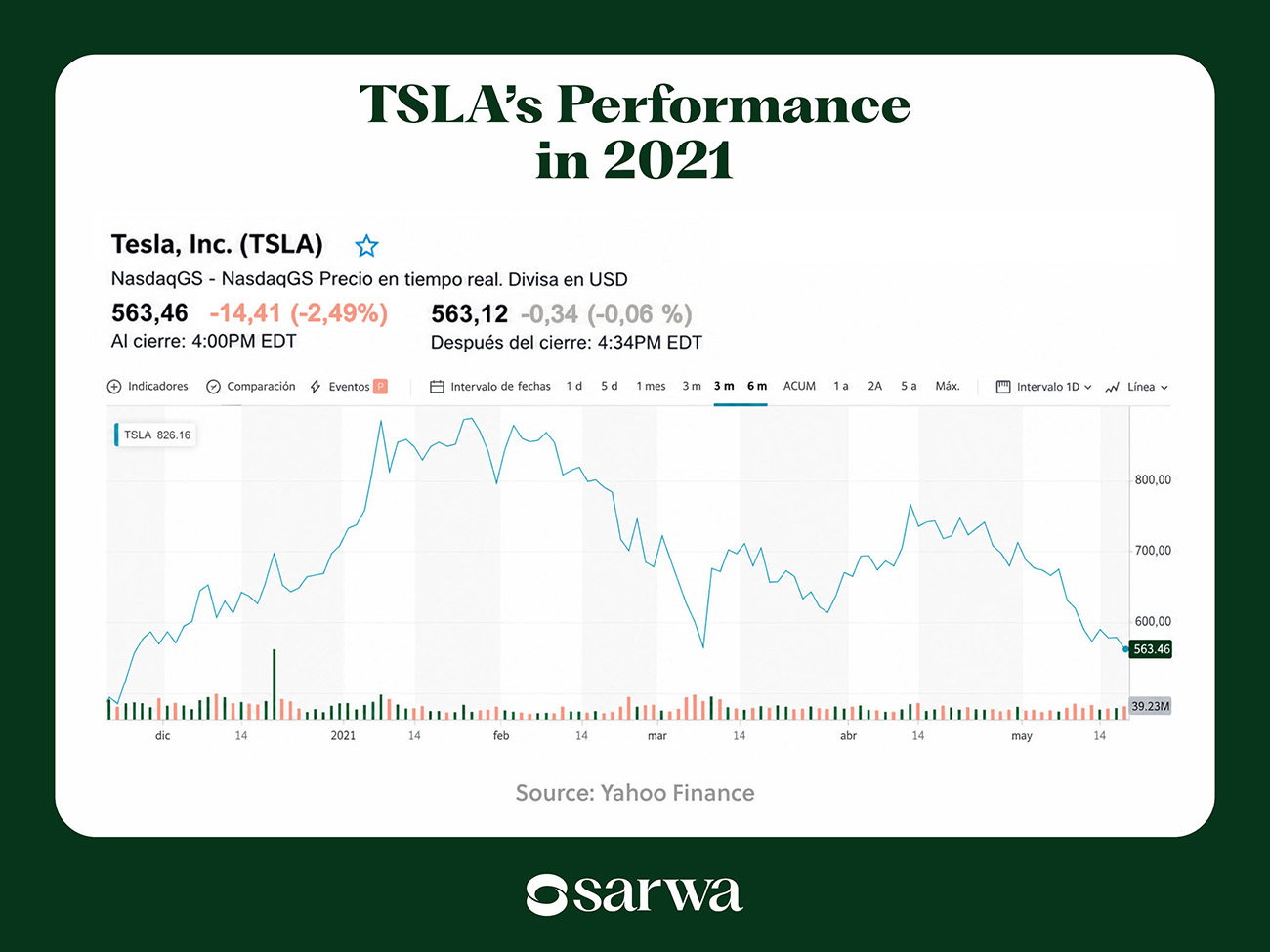
Source: Yahoo Finance
However, from July 26 to November 1, TSLA went on an incredible run, with a 77.83% price increase. Interestingly, the stock would again fall by more than 60% in 2022 as growth stocks faced the impacts of higher interest rates.
- Verdict: In terms of general expectations, Burry was right that Tesla’s overvaluation wouldn’t last. But the drop off was only temporary, and Tesla picked up pace after a 5-month drop off.
Since Burry did not give specific figures, it’s hard to say whether his prediction came true or not. In this case, we can only say that his prediction was partially true.

Prediction 3: Inflation would not be temporary
- The prediction: While most people were happy that the economy was opening up again after the COVID-19 lockdowns, Burry was worried about the inflationary impact.
“When we start working and playing again, inflation may be in store,” he said in an interview with Bloomberg in April 2020.
He made similar statements on Twitter in February 2021, as reported by Business Insider:
“Prepare for inflation,” he tweeted on February 19. “Re-opening & stimulus on the way. Pre-COVID, it took $3 debt to create $1 GDP, and it is worse now. In an inflationary crisis, governments will move to squash competitors in the currency arena. $BTC #gold.”
“Inflation pressure building,” he said four days later. “The Fed is monetizing $80 billion of Treasury debt per month, and now comes $trillions in stimulus/debt + reopening,” he tweeted four days later.
He also made multiple tweets warning about the dangers of inflation from an historical perspective. His warnings came at a time when many analysts and economists believed the post-lockdown inflation would only be temporary.
- Specificity: Though he didn’t provide specific numbers or timeframes, he was very confident that the stimulus checks and supply-chain disruptions that followed the pandemic would produce sustained (rather than temporary) inflation.
- Timing: The predictions came as early as 2020, when economies were only just reopening, and inflation wasn’t yet on central banks’ radar.
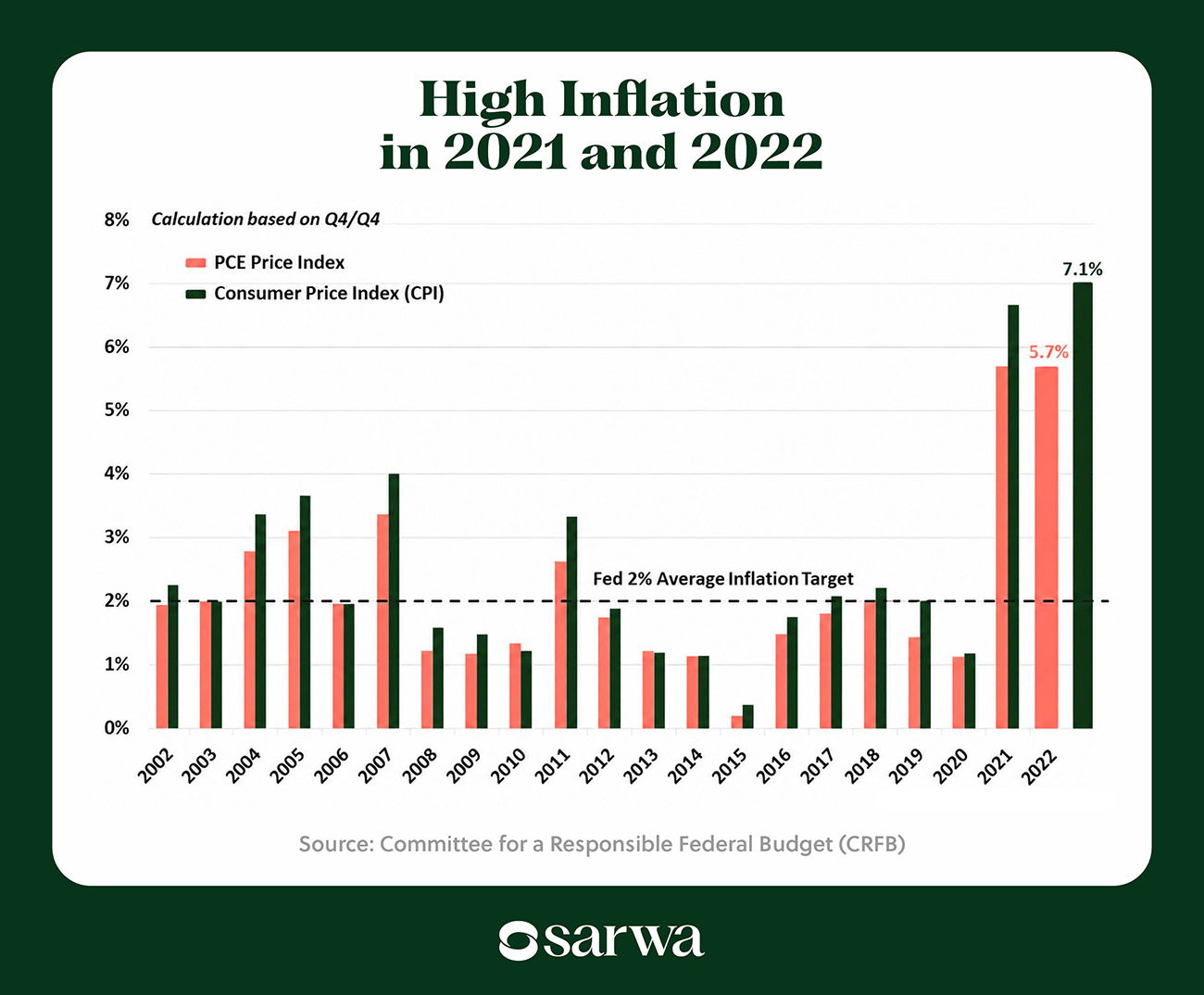
- Subsequent events: Inflationary pressure surged in 2021 and 2022 as governments across the globe pursued expansionary economic policies.
As the chart below shows, inflation (both CPI and PCE inflation) was through the roof in 2021 and 2022.
Source: Committee for a Responsible Federal Budget (CRFB)
The 2022 inflation level was the highest in the US since 1981, according to the CRFB. Similarly, the 10.7% peak in the Eurozone in October 2022 was the highest since 1997, according to CNBC.
- Verdict: Burry’s prediction came true. Expansionary policies post-pandemic led to a serious inflation problem.

Prediction 4: The meme stock bubble would burst
- The prediction: As said above, Burry’s mode of operation is to bet on undervalued stocks in sometimes unpopular sectors. Before GameStop became an internet sensation, Burry bought a stake in the stock in 2019.
However, in July 2021, he said he saw shades of 1999 and 2007 in the meme stocks market and predicted a bubble burst in an interview with Barron’s. For him, the whole thing had become a bandwagon, and he was sure we didn’t have to wait long for the stocks to crash since we had run out of money to pour into them.
A month before the interview, he had tweeted his views on the meme stocks market, as Business Insider reported:
“All hype/speculation is doing is drawing in retail before the mother of all crashes. #FOMO Parabolas don’t resolve sideways; When crypto falls from trillions, or meme stocks fall from tens of billions, #MainStreet losses will approach the size of countries. History ain’t changed.”
- Specificity: Though the prediction was not specific regarding timing, it was explicit about the scope of the crash. Also, it was a specific prediction about a particular subset of the equity market.
- Timing: The prediction came in June/July 2021, when retail investors were still pushing up the prices of these stocks.
- Subsequent events: There was a massive selloff in the meme stocks market, with many stocks falling by 70-95% from their peaks. Below is a perfect description of what happened to two of the most popular meme stocks of that period, according to Charles Schwab, a global financial firm:
“Shares of GameStop spiked above $120 intraday in early 2021, surged again several times to above $80 later that year, and now trade below $25. The AMC story is similar and even more dramatic. Shares hit an intraday high of $726 in late May 2021 and now trade below $4.”
- Verdict: Burry was right: meme stocks did experience a collapse that many of them have not recovered from, five years later.

Prediction 5: Sell
- The prediction: Burry tweeted the word ‘sell’ in January 2023, and many people interpreted this as a prediction of an imminent market downturn. In other words, ‘get out of the market before it crashes.’
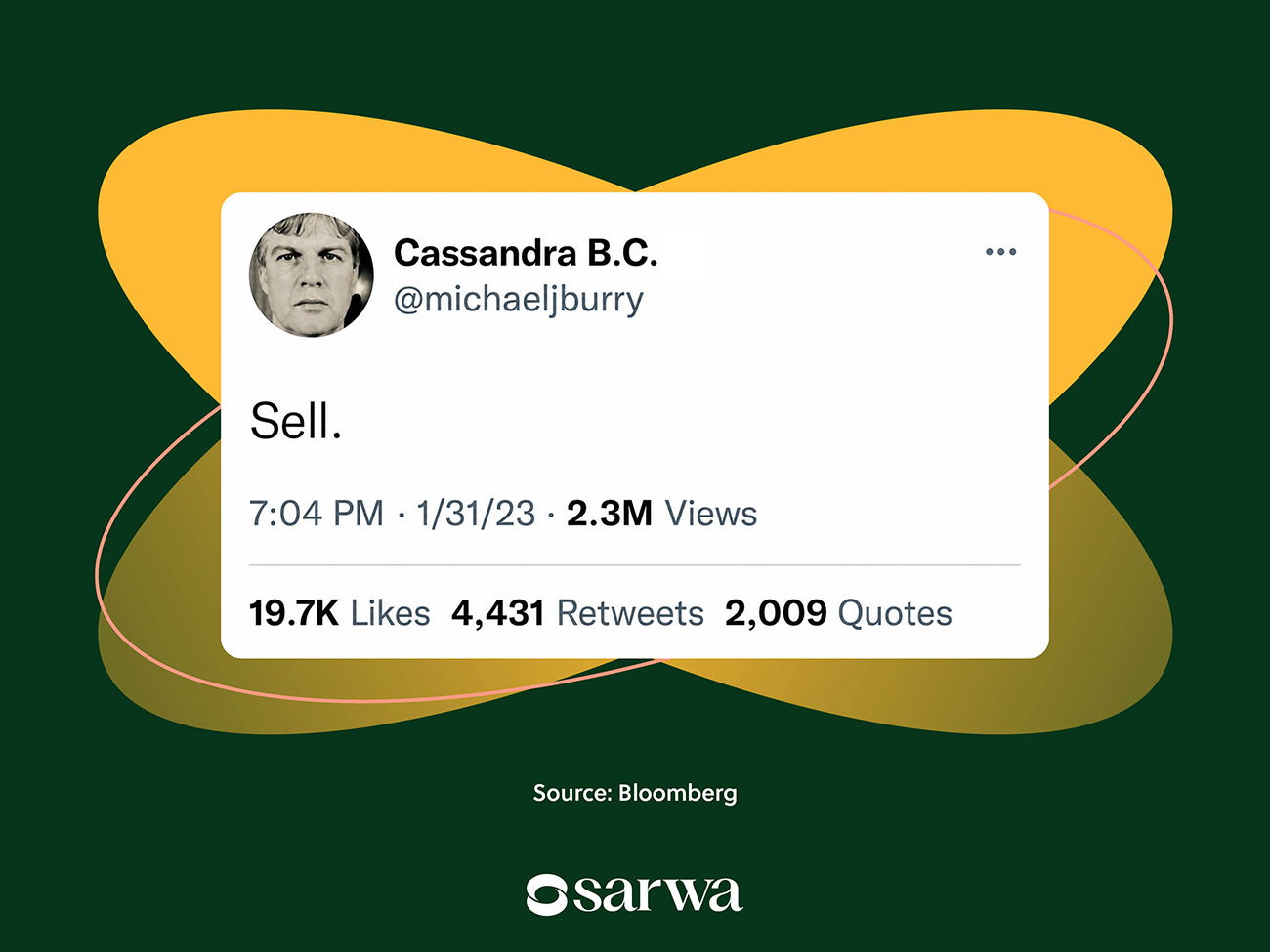
Source: Bloomberg
This interpretation of the tweet was understandable since Burry had speculated the year before that the S&P 500 Index could tumble by 50%, with rising inflation and a multiyear recession being live possibilities, as reported by Business Insider. He even sold off 50% of his US portfolio in 2022.
- Specificity: A one-word tweet is as nonspecific as they can be. However, previous statements led many to see this as a prediction of a market downturn.
- Timing: The tweet was made on January 31, 2023, when the stock market was on an upside.
- Subsequent events: The S&P 500 Index continued its bullish movement, rallying by 47.8% between February 3, 2023, and February 14, 2025.
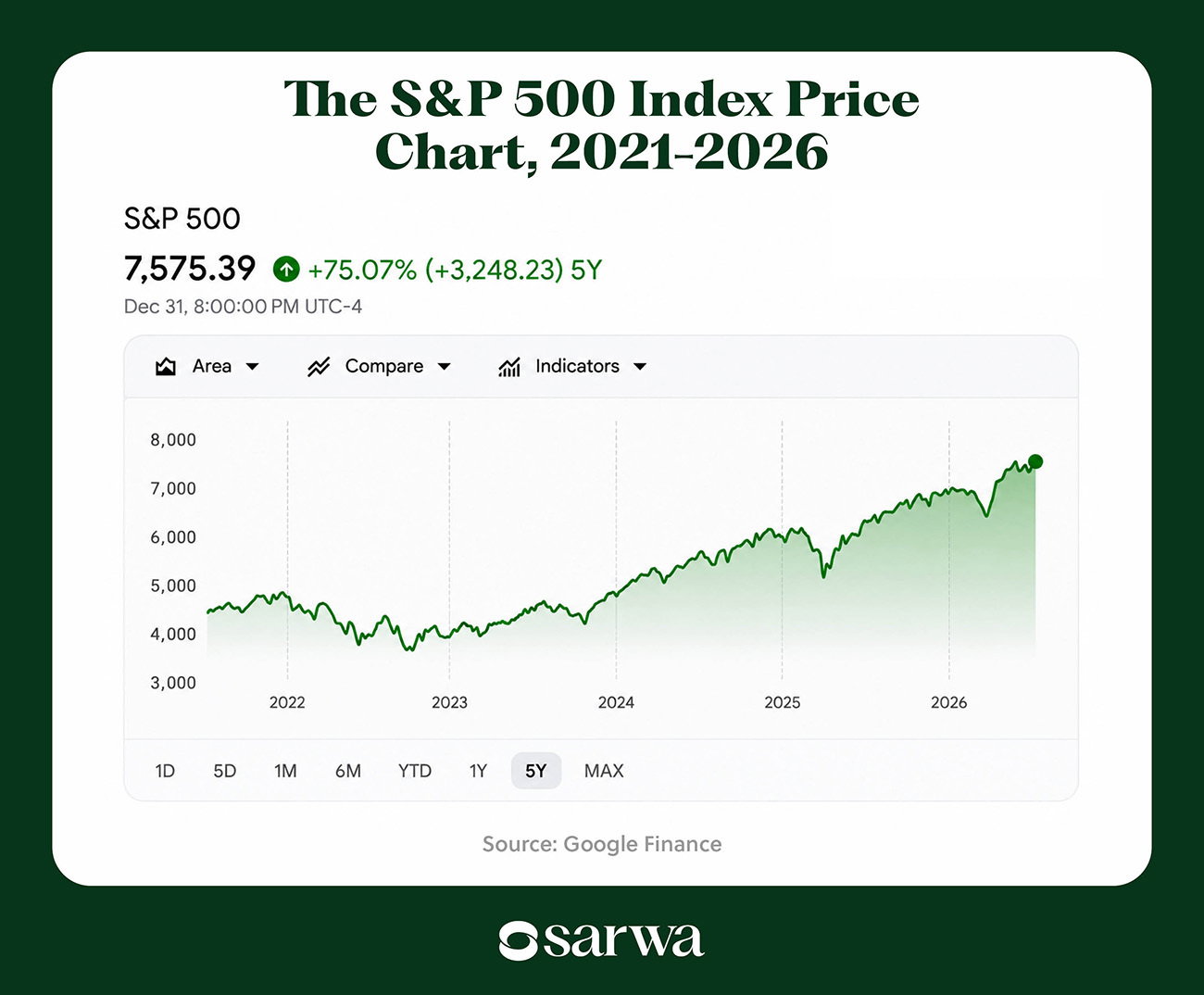
Source: Google Finance
- Verdict: A stock market downturn did not happen, inflation did not worsen, and the US did not experience a multi-year recession. Burry’s prediction did not come true.
He would go on to bet against the S&P 500 Index and the Nasdaq 100 later in the year, as reported by CNN, but the expected crash still did not happen.

Prediction 6: The AI bubble burst
- The prediction: Michael Burry is one of those (see also Julien Garran and Paul Tudor Jones) who have advised caution as investors continue to obsess over AI, following the explosion of interest in generative AI.
On May 8, he wrote an article for his Substack where he argued that the latest rally in AI stocks is similar to the last months of the dot-com bubble.
“Stocks are not up or down because of jobs or consumer sentiment,” he said. “They are going straight up because they have been going straight up.”
In other words, he believes that stocks, particularly in the AI industry, are being driven by investor frenzy rather than economic data and fundamentals.
He started raising alarm bells in 2025 when he tweeted the following, as reported by Moneywise:
“Sometimes, we see bubbles. Sometimes, there is something to do about it. Sometimes, the only winning move is not to play (4).”
They also noted that Scion Asset Management disclosed short positions on Nvidia (NVDA) and Palantir (PLTR) by buying millions of put options.
- Specificity: Burry did not say when the AI bubble will burst or how significant it will be.
- Timing: He made this prediction when the AI bubble was still building.
- Subsequent events: So far, the AI bubble has not shown any signs of bursting. The warning signs are there with many AI companies without a profitable business model, raising money at incredible valuations. We have also seen how the focus on AI has led to a neglect of the real sector by private equity and venture capital firms.
However, there are certain differences between the AI era and the dot-com bubble era, according to Janus Henderson Investors, an investment management firm. For one, AI investing is primarily driven by solid businesses (hyperscalers like Microsoft, Amazon, Google, and Meta) with strong cash flows rather than endless IPOs, and many of them are building AI infrastructure that will reduce the operational costs of companies in the ecosystem.
Also, the technology sector’s valuation in relation to the general equity market is lower than it was in the dot com era. Furthermore, the global macroeconomic situation today supports expansionary policies, unlike the contractionary policy environment of the early 2000s.
- Verdict: It remains to be seen if Burry’s warning about the AI bubble will materialize or not. This could end up being true, partially true, or false.

3. What retail investors can learn from Michael Burry and his predictions
We can conclude that Michael Burry’s predictions have been a mixed bag. He got some right, some partially right, and some wrong.
Beyond the act of predicting, the content of the predictions also tells us a few things about the financial markets that are relevant to retail investors.
Lessons about predictions
- There are patterns in the financial markets: Burry can make accurate predictions about the market because he has learnt to identify patterns. The lead-up to the Great Recession reminded him of the dot-com era, and both were on his mind when he saw the speculation in the meme stocks market in 2021.
We also saw that his concerns about AI are based primarily on similarities he saw to the dot-com era.
Since markets are driven by investors’ emotions, and human actions are repeatable, it is understandable that the financial markets exhibit certain patterns.
The lesson here is to pay attention to these patterns and make informed decisions based on them.
- No one can always predict the markets accurately: Even Burry, with his deep knowledge of market patterns, couldn’t get it right every time. This is why some experienced investors suggest that retail investors should stick to investing in the S&P 500 Index or a more diversified passive investing strategy with ETFs.
Though some retail investors are more skilled at timing the market and predicting its movements, many investors without the skills or time might be better off sticking with the advice of these experienced investors.
“Predictive forecasts must be taken as educated guesses rather than an investment strategy,” according to Dinesh Kumar, a Chartered Financial Advisor and founder of Sheet Rows, a platform providing free Excel and CSV tools. “They may help investors assess risks, but cannot take the place of diversification, diligent research, and a solid financial plan.”
- Timing is important when predicting the market: There are times when Burry correctly predicted the market, but it took some time before his prediction panned out. Even when one can predict the market, the timing needs to be accurate for the forecaster to maximize the benefits of the prediction.
“The outcome of the marketplace depends upon both the accuracy of your analysis and the timing of those events,” according to Kevin Marshall, a Certified Public Accountant and the founder of Amortization Calculator, a finance tool. “Even a correct analysis may result in disappointing returns when events occur after the time that you expected them to happen.”
In other words, “markets can remain irrational longer than you can remain solvent,” according to a popular quote attributed to John Maynard Keynes, the father of Keynesian Economics.
The difficulty of getting both prediction and timing right is another reason some experts recommend passive investing to retail investors.
Lessons about investing from his predictions
- Watch out for speculative bubbles: Burry has correctly identified at least three financial market bubbles: the dot-com bubble, the housing market bubble, and the meme stock bubble. And it remains to be seen if the AI bubble will also burst.
Burry’s ability to detect these bubbles comes from his commitment to value investing and sound fundamental analysis. He can look beyond market prices to evaluate intrinsic value and identify where significant mispricings are present.
If you also want to capture value in the market, then the knowledge and practice of fundamental research is inevitable.
“The greatest lesson from Burry is the value of independent thinking and disciplined fundamental analysis,” according to Rulfs. “Rather than following market sentiment, he focused on valuation, balance sheets, and downside risk. Those principles remain highly relevant for retail investors because ‘fundamentals age better than headlines.’”
- Question market consensus: We have seen that many of Michael Burry’s predictions were contrarian when he made them. He prioritized his convictions about the market (based on his knowledge of economic and company-specific fundamentals) over the consensus of analysts and other investors. And he was proved right many times.
Lessons from his investment philosophy
- Do your own research (DYOR): If you want to embrace an active investing approach, then you are better off doing your own research and following your convictions rather than falling into the fear and greed cycle, driven by herd mentality.
- Patience is key: Burry started shorting the mortgage market at least two years before it crashed. We have also seen that many of his other predictions took time to materialize. This shows that it sometimes takes time before your convictions about the market play out. Patience and emotional discipline often outperform constant trading.
“The biggest lesson from Burry is that being early can feel the same as being wrong until the market finally reprices risk,” said Noam Korbl, the CFO of PropFirms, a Prop Firm directory. “That is hard for retail traders because they usually do not have unlimited time, capital, or emotional discipline.
- Manage both risk and returns: A recurring theme in Burry’s investing is identifying downside risks before they become widely recognized. He often prioritizes preserving capital over chasing the highest possible returns.
Even when he makes his contrarian bets, he ensures that the downside risk is limited while the upside risk is massive.
Instead of chasing returns, focus on risk-adjusted returns.
While paying attention to these lessons, retail investors should remember that Burry was a hedge fund manager and they can’t implement his strategies in the same way.
“Retail traders can learn from the research discipline, but they should be careful about copying the concentration, short exposure, or timing-heavy views,” said Korbl. “Those are very difficult to manage without professional risk controls.”
Yet, retail investors, especially those with an active bent, can apply lessons about fundamental research, value investing, risk management, and personal convictions to their portfolios.
If you are in the UAE, you can build your portfolio around these investment principles on Sarwa.
With Sarwa, you can transfer money between your local bank account(s) and your brokerage account for free. We also provide bank-level security to protect your data and money.
You can buy a fraction of a share of any stock of interest, and start building your wealth with as little as $500. We charge a low commission of the higher of $1 or 0.25% of the traded amount.
We also provide you with free educational resources that will help you get a better handle on the financial markets.
Are you ready to start building your investment portfolio in the UAE? Sign up now for a brokerage account with Sarwa for cost-effective and convenient access to US stocks, ETFs, and stock options.
Takeaways
- Michael Burry’s reputation is deserved, his prediction of the 2008 U.S. housing crash was remarkably accurate. However, some of his later calls were only partially correct or proved wrong.
- Evaluating a forecast requires considering its specificity, timing, and how closely subsequent events matched the original claim.
- Burry’s greatest strength is his investment philosophy: independent thinking, deep fundamental research, value investing, and disciplined risk management.
- Rather than following Burry’s exact trades, retail investors can benefit more from applying the principles that undergird his investment philosophy.