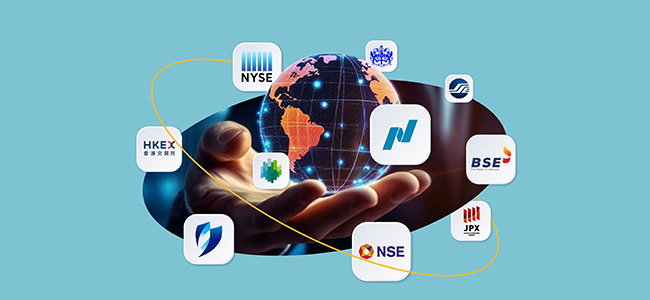
You have probably seen them in movies: those large buildings where traders and brokers shout bids and offers and wave their hands to signal to each other while going through fast-paced negotiations.
Or perhaps you saw the modern equivalent: traders and brokers sitting in front of computers as they electronically match and execute orders.
Since the launch of the Amsterdam Stock Exchange in 1602, stock exchanges have continued to facilitate financial market transactions, serving as intermediaries between buyers and sellers.
As a UAE investor, knowing the top stock exchanges in the world will help you understand the need to expand the scope of your portfolio beyond the UAE. This is because some of the most innovative, dynamic, and growth-oriented companies are listed on these exchanges, and gaining access to them can help you meet your investment goals more efficiently.
So, which is the largest stock exchange in the world?
In what follows, we will consider the top stock exchanges in the world by market capitalization and how you can gain access to some of the listed assets on those exchanges from the UAE.
Do you want to take advantage of opportunities in the global economy in your portfolio? Subscribe now to Sarwa’s Fully Invested newsletter for regular insights from experts you can trust.
1. NASDAQ
Overview
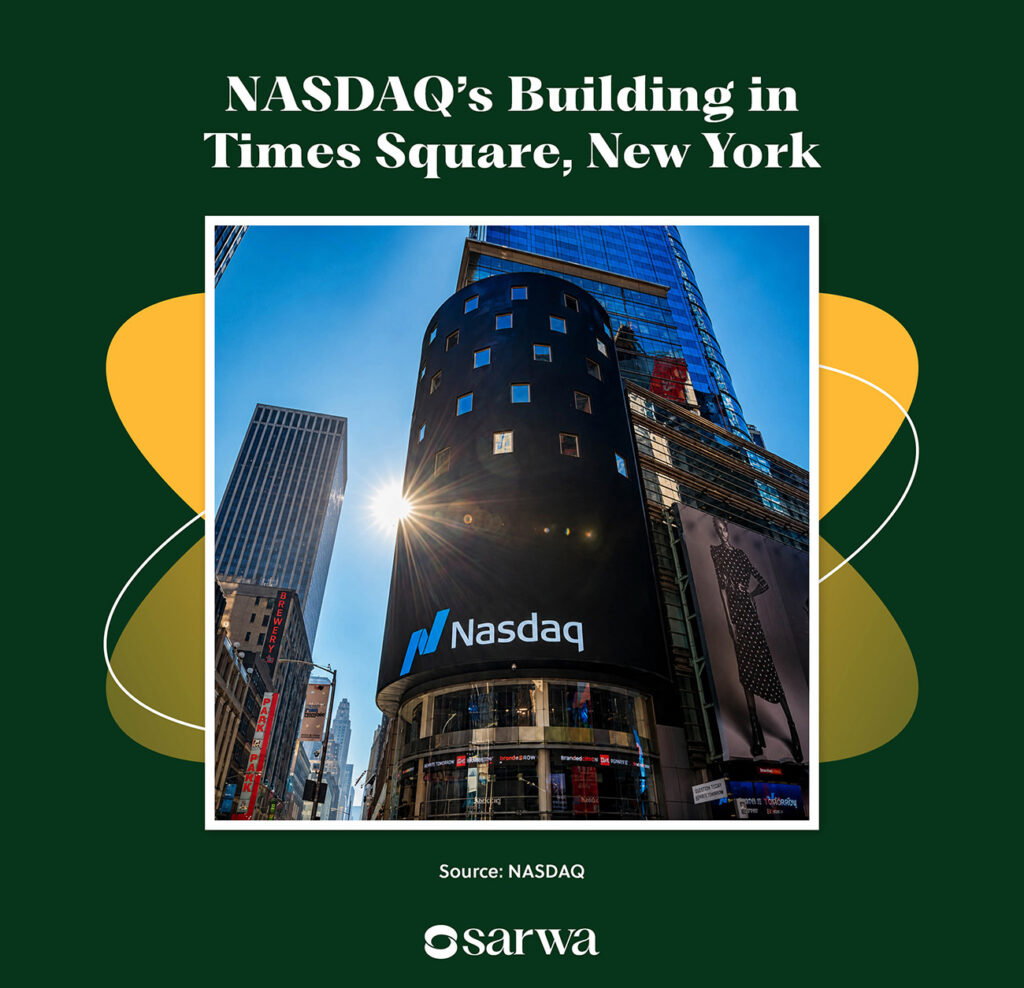
The National Association of Securities Dealers Automated Quotations (NASDAQ) was founded in 1971 as the first electronic stock market. It removed the need for a physical trading floor, as traders and brokers used computers to provide real-time price quotes.
NASDAQ is known globally as the home of top technology and high-growth companies (like Amazon, Tesla, NVDA, Alphabet, etc.). For some, its performance is a measure of the state of the global technology sector.
In June 2025, it leapfrogged the New York Stock Exchange (NYSE) to become the biggest stock exchange in the world. It’s also staying above the NYSE in terms of daily trading volume.
(Except otherwise stated, market capitalization and the number of listed securities are from the World Federation of Exchanges [WFE].)
Other details
- Market cap: $32.27 trillion
- No of listed securities: 3,301
- Popular indices: NASDAQ 100, NASDAQ Composite
- Top 3 listed companies (by market cap): NVIDIA Corporation (NVDA), Apple Inc. (AAPL), and Microsoft Corporation (MSFT).
2. New York Stock Exchange (NYSE)
Overview
The NYSE was founded in 1792. It started operating under its current name in 1963, and it’s currently owned by Intercontinental Exchange (ICE), a financial services company that owns major exchanges across the globe.
It has been the largest stock exchange in the world since the end of WW1, though it was recently (temporarily?) displaced by the NASDAQ, according to WFE.
Unlike other exchanges, it continues to maintain a hybrid model that combines electronic trading with a physical trading floor.
The significance of the ringing of its opening and closing bells (a duty given to popular people) reiterates the historic significance of this stock exchange.
It remains the home of some of the biggest corporations in the world. Also, unlike NASDAQ, it lists companies from a wide range of sectors, including financials, health, consumer discretionary, technology, etc.

Source: NYSE
Other details
- Market cap: $32.20 trillion
- No of listed securities: 2,154
- Popular indices: S&P 500 Index, Dow Jones Industrial Average, Russell 2000
- Top 3 listed companies (by market cap): Berkshire Hathaway Inc. (BRK.A), JPMorgan Chase & Co. (JPM), Walmart Inc. (WMT)
3. Shanghai Stock Exchange (SSE)
Overview
SSE is China’s main stock exchange.
It was founded in its modern form in 1990, though stock trading in China goes back to the 1860s. It is home to some of the largest companies in the Chinese banking (Industrial and Commercial Bank of China, for example), energy (PetroChina, for example), and industrial (Sany Heavy Industry, for example) sectors.
Each listed security has A shares that are quoted in yuan and B shares that are quoted in USD and made available to international investors.
Given its size and the number of sectors represented, it is often used as a measurement of the economic health of the country.

Source: LinkedIn
Other details
- Market cap: $8 trillion
- No of listed securities: 2,290
- Popular indices: SSE Composite Index, SSE 50 Index, SSE STAR Market
- Top 3 listed companies (by market cap): Agriculture Bank of China Limited, Industrial and Commercial Bank of China Limited, and China Construction Bank Corporation.
4. Euronext
Overview
Euronext is a pan-European exchange that connects multiple national stock exchanges (seven of them, at the time of writing) in Europe to a single trading platform.
It was founded in 2000 from a merger of Amsterdam, Brussels, and Paris stock exchanges.
Most of its securities are listed in Euros, though some are listed in the local currencies of the relevant country. Euronext lists companies from a variety of sectors, including consumer goods, energy, finance, and technology.

Source: Reuters
Other details
- Market cap: $7.67 trillion
- No of listed securities: 1,739
- Popular indices: Euronext 100 index, AEX (Amsterdam), CAC 40 (Paris), BEL 20 (Brussels), PSI 20 (Lisbon), ISEQ 20 (Dublin), OBX (Oslo), FTSE MIB (Milan).
- Top 3 listed companies (by market cap): ASML Holdings NV (ASML), LVMH Moet Hennessy Louis Vuitton (MC), and L’Oreal (OR).
5. Japan Exchange Group (JPX)
Overview
JPX was founded in 2013 as a merger of the Tokyo Stock Exchange and the Osaka Securities Exchange. The Tokyo Commodity Exchange and Japan Securities Clearing Corporation are also subsidiaries of JPX.
Many international investors use the JPX as a measure of the health of the Japanese economy. It lists some of the tech, financial, and industrial giants that are propelling the Japanese economy (Sony, Toyota, Honda, SoftBank, etc.). In addition to equities, JPX lists ETFs, REITs, commodities, and derivatives.

Source: Wikipedia
Other details
- Market cap: $7.45 trillion
- No of listed securities: 3,934
- Popular indices: Nikkei 225, TOPIX, and JPX-Nikkei 400.
- Top 3 listed companies (by market cap): Toyota Motor Corporation (TM), SoftBank Group Corporation (SFTBY), and Mitsubishi UFJ Financial (MUFG).
6. Hong Kong Stock Exchange (HKEX)
Overview
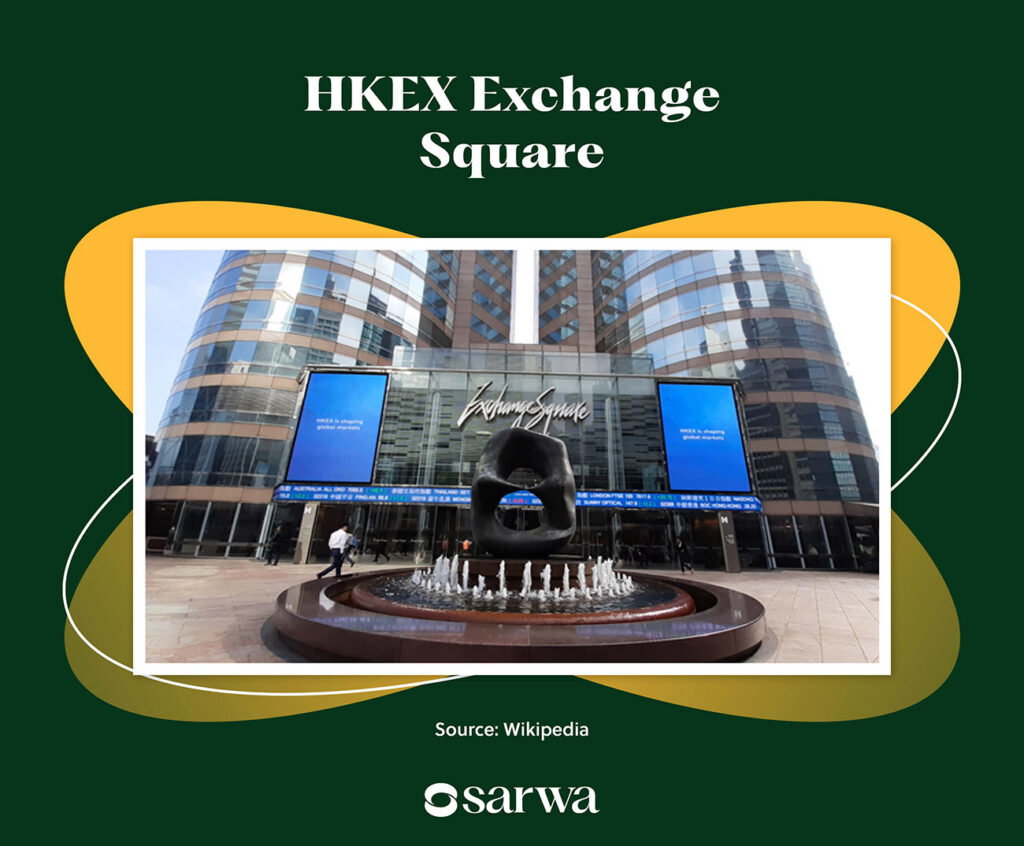
HKEX was founded in 1891 and was given its current name in 1914.
It is often seen as the gateway to China for institutional investors. Many Chinese companies listed in the US are also listed on this exchange. There is also a program that connects HKEX to SSE and the Shenzhen Stock Exchange (SZSE) for easy cross-border trading.
HKEX lists companies from various sectors, including biotech, technology, finance, and real estate, among others. Some of the popular ones include Alibaba, Tencent Holdings, and HSBC Holdings.
It also offers ETFs, REITs, derivatives, and commodities.
Source: Wikipedia
Other details
- Market cap: $6.41 trillion
- No of listed securities: 2,655
- Popular indices: Hang Seng Index (HSI), Hang Seng China Enterprises Index (HSCEI), and Hang Seng TECH Index.
- Top 3 listed companies (by market cap): Alibaba Group Holding, AIA Group, and Hong Kong Exchanges and Clearing Limited.
7. London Stock Exchange (LSE)
Overview
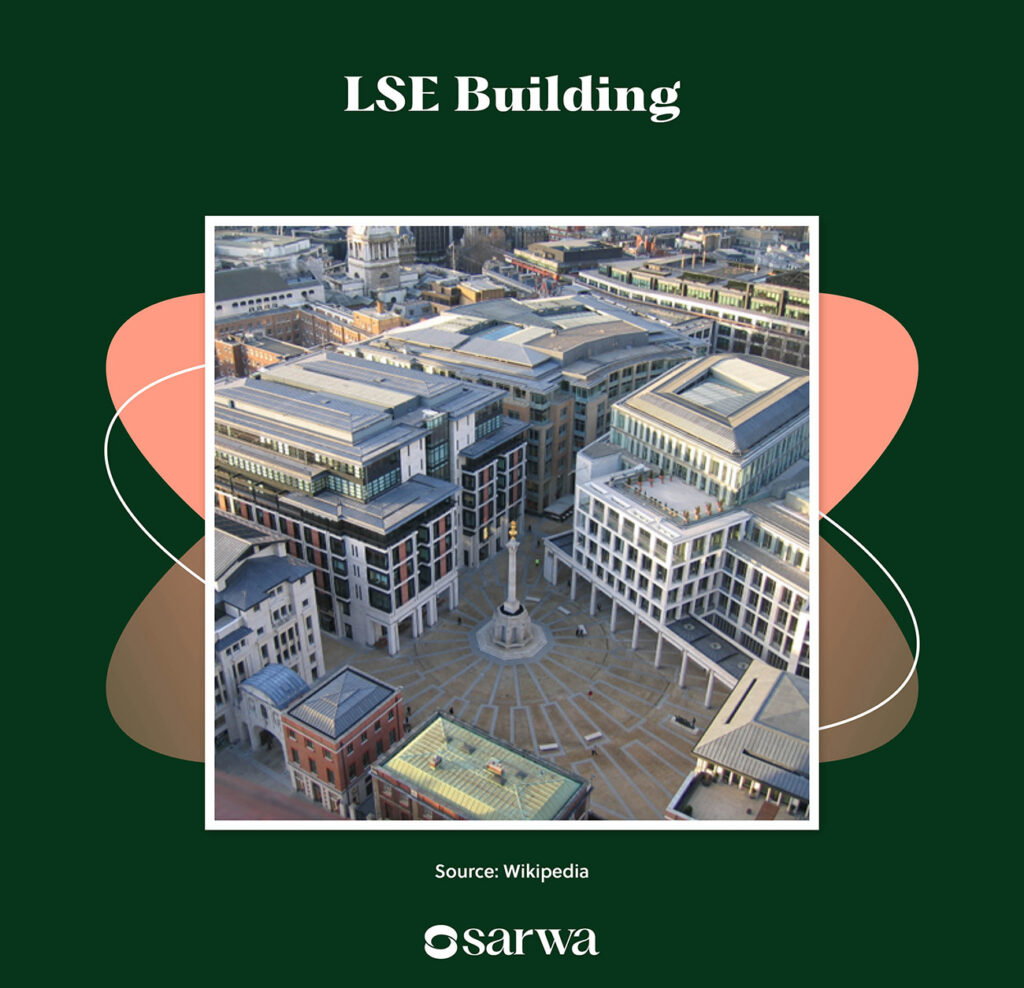
LSE was founded in 1801, though its origin goes back to the Royal Exchange, which was founded in 1571. It’s one of the oldest exchanges in the world and was the most valuable before losing its place to the NYSE at the end of WW1.
The exchange lists both UK-based and international companies, and it is known for its strength in the energy, mining, banking, and insurance sectors. It’s also popular as a bridge between companies in emerging markets and foreign investors, with many of them choosing to list on the exchange.
Other details
- Market cap: $5.9 trillion as of May 2025, according to Vantage Markets. LSE is not listed on the website of WFE.
- No of listed securities: 1,900 (from Vantage Markets)
- Popular indices: FTSE 100 Index, FTSE 250 Index, FTSE 350 Index, and FTSE All-SHare Index
- Top 3 listed companies (by market cap): AstraZeneca (AZN), HSBC Holdings (HSBC), and Shell Plc (SHEL)
8. Shenzhen Stock Exchange (SZSE)
Overview
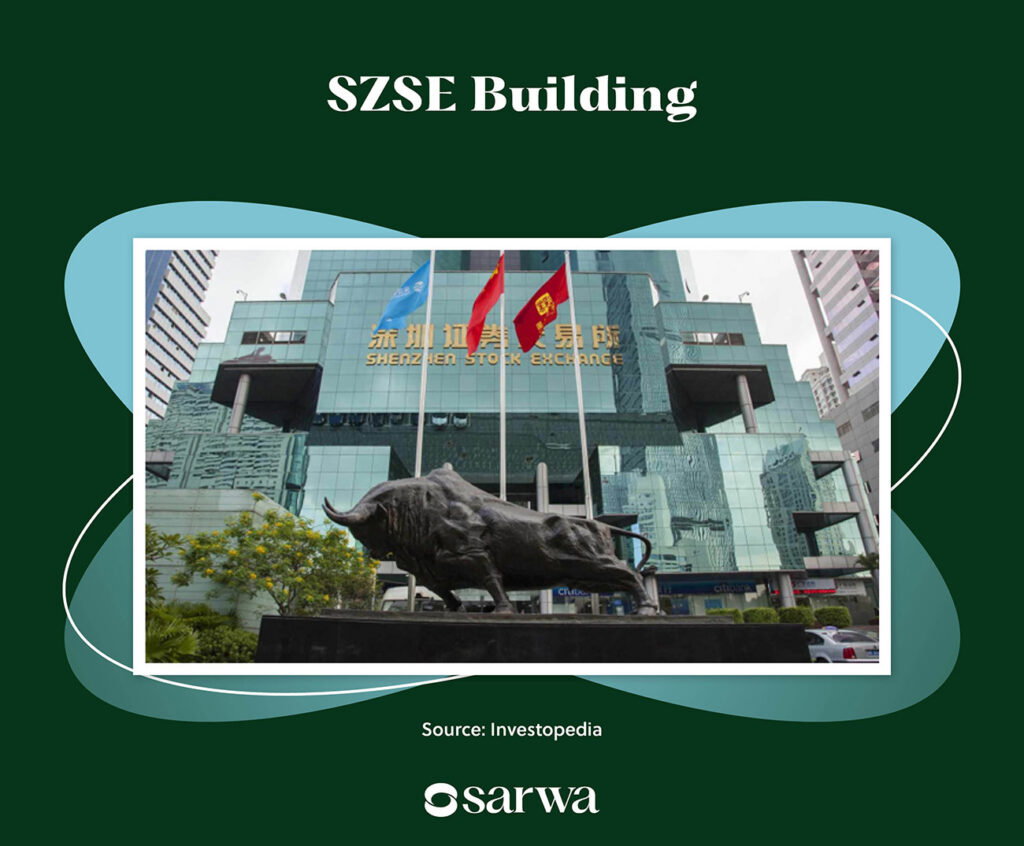
SZSE was founded in 1990, though its origin goes back further to 1987. SZSE and SSE are the two main stock exchanges in mainland China.
It has a main board that lists large companies across various sectors, an SME board focusing on small and medium enterprises, and a ChiNext Market that, like the NASDAQ, targets innovators in the technology space. This is why the performance of SZSE is seen as a measure of the health of China’s innovation economy.
Source: Investopedia
Other details
- Market cap: $5.21 trillion
- No of listed securities: 2,883
- Popular indices: SZSE Composite Index, SZSE Component Index, ChiNext Index, SZSE 100, SZSE 200, SZSE 300, SZSE 300, SZSE 700, and SZSE 1000
- Top 3 listed companies (by market cap): Contemporary Amperex Technology, BYD Company Limited, and Midea Group Company Limited.
9. Bombay Stock Exchange (BSE)
Overview
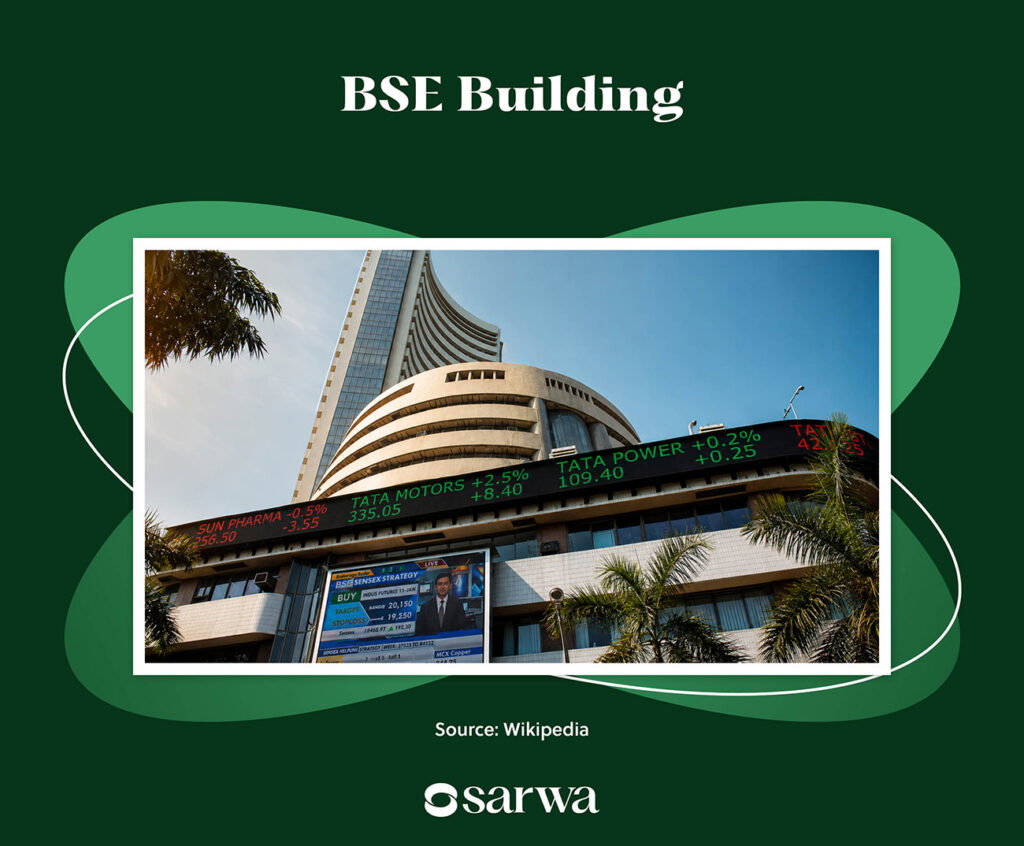
BSE was created in 1875, and it is the oldest stock exchange in Asia.
It is known for having one of the highest numbers of listed securities. There you will find some of the top Indian companies across various sectors, especially banking, information technology, energy, and consumer goods.
Even more interesting, it has prestige as one of the stock exchanges with the fastest transaction processing time, making it possible to execute a huge volume of trades within the trading hours. It also provides diverse products, including equities, derivatives, currencies, debt instruments, commodities, and mutual funds.
Source: Wikipedia
Other details
- Market cap: $5.08 trillion
- No of listed securities: 5,467
- Popular indices: SENSEX (BSE 30), BSE MidCap and SmallCap, BSE 100, BSE 200, and BSE 500
- Top 3 listed companies (by market cap): Reliance Industries Limited (RIL), HDFC Bank Limited (HDB), and Bharti Airtel Limited (BHARTIARTL).
10. National Stock Exchange of India (NSE)
Overview
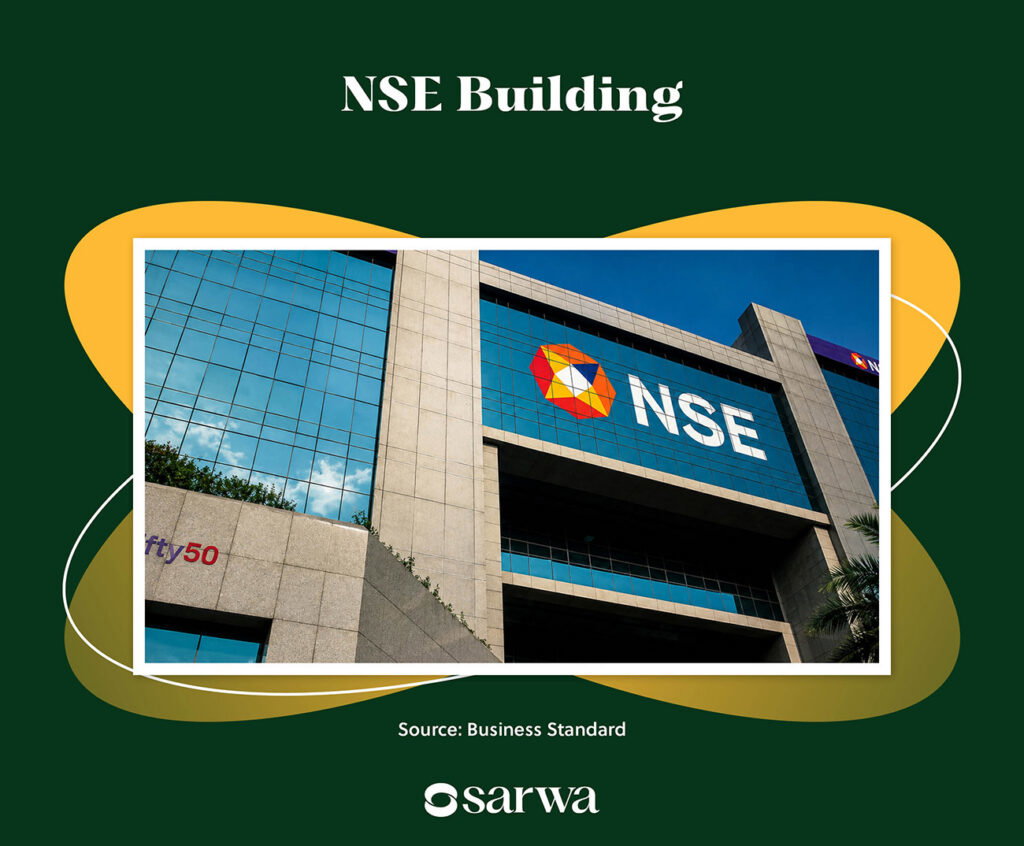
NSE was founded in 1992 with operations starting in 1994.
It introduced electronic trading to India, and it is also known as one of the fastest stock exchanges in the world. Also, its derivatives market has one of the highest liquidity in the world.
NSE is often the preferred exchange by Indian startups for IPOs.
Other details
- Market cap: $4.92 trillion
- No of listed securities: 2,822
- Popular indices: NIFTY 50, NIFTY Next 50, and NIFTY 500
- Top 3 listed companies (by market cap): Reliance Industries Limited (RIL), Tata Consultancy Services (TCS), and HDFC Bank Limited (HDFC).
(Other honourable mentions: Toronto Stock Exchange (TSX), Taiwan Stock Exchange (TWSE), Korea Exchange (KRX), Frankfurt Stock Exchange (FSE), and Australia Securities Exchange (ASX))
Why should you pay attention to international securities?
Why bother with a list of the biggest stock exchanges in the world? Couldn’t you just focus on investing in companies listed in the UAE?
To answer these questions, let’s consider some of the reasons for gaining exposure to international financial instruments (especially stocks and bonds).
Higher returns
First, as this list shows, some of the most popular and prosperous companies are listed outside of the UAE.
Many of these companies have produced incredible returns for shareholders and continue to do so. To take an obvious example, over the past five years, NVDA has produced a total return of 1,344.78%. Why deprive yourself of the possibility of benefitting from such high-growth companies?
Profiting from current trends
Second, and similarly, international exposure helps you profit from current trends in the global economy.
Today, artificial intelligence (AI) is a popular theme everywhere. But how many UAE companies are big on AI? Not much. With international exposure, you can invest in companies that are investing in this theme in anticipation of future appreciation in share prices.
Also, there are times when a certain country enters into a period of high economic growth (Japan between 1950 and 1973, for example). International exposure helps you to take advantage of such opportunities by participating in their capital markets.
Portfolio diversification
Third, international exposure is a good way to diversify your portfolio.
Investing in developed markets like the US and the UK can help to reduce portfolio risk and add more stability. This is because these economies are stable and can better cope with economic shocks.
On the other hand, emerging markets like the UAE, India, South Africa, and Vietnam, among others, are capable of generating high growth rates.
By combining exposure to emerging and developed market securities (stocks and bonds), you can create a portfolio with the right return and risk profile.
Similarly, diversifying across countries ensures that you are not putting all your eggs in one basket. If you are 100% invested in the UAE, what happens when a certain economic situation causes a strong market downturn in the economy? Your portfolio will probably tank.
However, if you have exposure to other countries that are doing well at the same time the UAE is performing woefully, your portfolio will be stable or even grow.
“Spreading your investments across different markets can help reduce overall portfolio risk by providing a buffer against domestic market fluctuations,” according to Vanguard Group, a global financial firm.
In such a situation, your portfolio can only suffer if there is a global economic crisis that negatively affects every country equally (which is less likely).
How to gain exposure to international securities in the UAE
There are two main ways to gain exposure to international securities.
The first is to buy individual stocks and bonds through a trading platform that provides access to international markets.
A second option is to buy baskets of international securities through index funds or exchange-traded funds (ETFs). These funds use some of the indices we have identified above as benchmarks.
Some ETFs focus on developed markets (example: Vanguard FTSE Developed Markets ETF) and emerging markets (example: Vanguard FTSE Emerging Markets ETF), while others track a popular index in a given country (examples: SPDR S&P 500 ETF Trust, iShares MSCI Japan ETF, and iShares Core FTSE 100 UCITS ETF).
If you are in the UAE, you can gain international exposure to top stocks and bonds from the top stock exchanges in the world on Sarwa.
We especially provide you with access to individual stocks from the US, the largest stock market in the world. In addition, you can purchase ETFs that track developed markets, emerging markets, and even national stock markets.
With Sarwa, you can create a diversified portfolio that can thrive during diverse economic conditions and profit from the activities of the top innovators in the world.
What are you waiting for? Sign up today for Sarwa to invest in and trade international securities from the UAE in a cost-effective, seamless, and secure way.
Takeaways
- The world’s major stock exchanges list the most innovative and high-growth companies that drive global markets.
- Investing across developed and emerging markets helps balance risk and reward, protecting your portfolio from local market downturns.
- Exposure to international markets lets you participate in global themes like AI, renewable energy, and fintech innovation.
- With platforms like Sarwa, UAE investors can easily trade or invest in international stocks and ETFs from these global exchanges.