
If done right, futures trading can help minimize risk and amplify returns. However, just as the same sun that hardens clay melts ice, futures trading done wrong can amplify your losses and increase your risk exposure.
This is one reason why futures trading is inappropriate for a beginner trader who doesn’t understand them enough or cannot handle the complexity involved.
But what better way to learn how to make money trading futures than listening to experts and experienced traders who have succeeded in using them?
In this article, we will identify some expert tips that will make you confident in the futures market and help you make money.
Do you want to gain a better understanding of the financial market and become a better trader? Subscribe to Sarwa’s newsletter today for regular educational resources.
1. The first (and obvious) lesson: Understand the market, inside and out
“An investment in knowledge pays the best interest,” said Benjamin Franklin, a US founding father.
Before attempting to learn how to make money trading futures, you must gain a thorough (if not exhaustive) understanding of the market. If someone asks you “What is the futures market?” would you be confident explaining the ins and outs of the market?
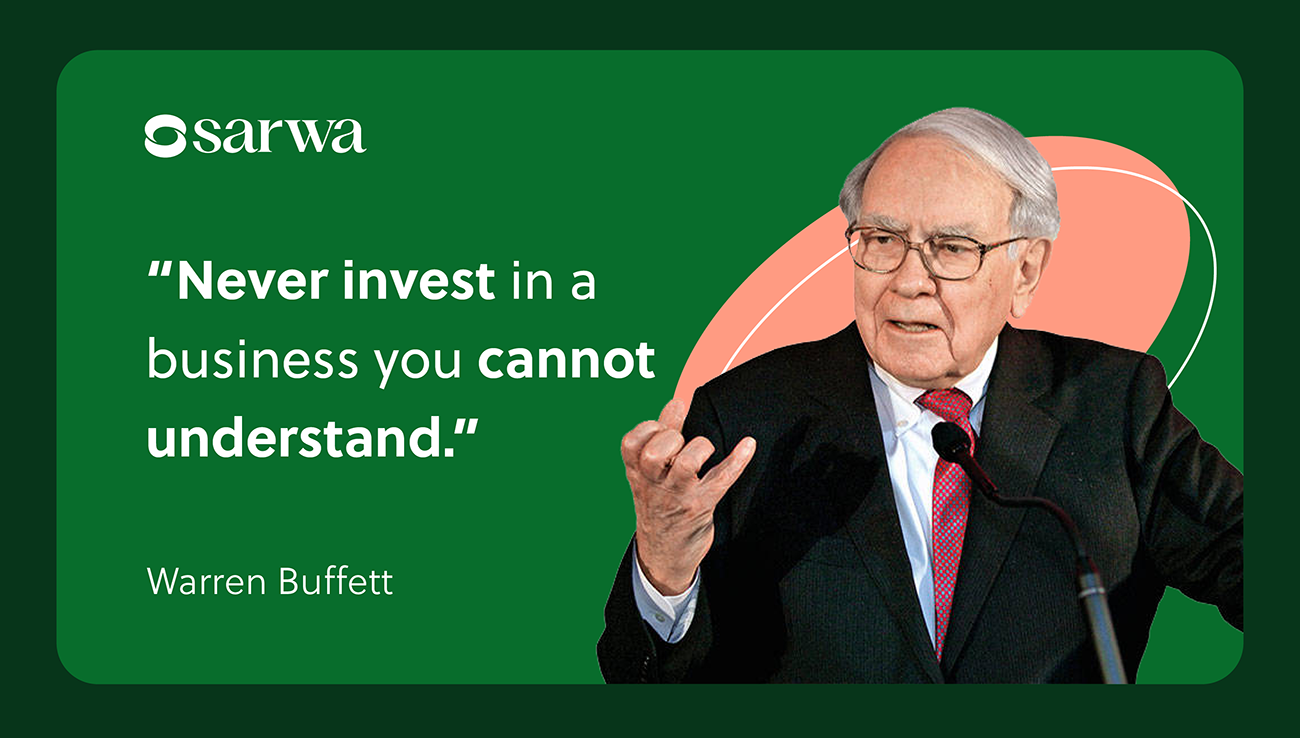
In one of Warren Buffett’s quotes, he said you should not invest in a business you don’t understand. The same principle applies to every financial instrument, including derivatives like futures.
For futures contracts, you need to know what they are, how they operate, where you can buy them, how futures trading differs from stock and options trading, and the common futures trading strategies.
Furthermore, your knowledge should not be one-sided. You should seek to know both the pros and cons of futures trading,
[What is the futures market? Learn more about the basics of futures trading by reading “What are Futures and Options in the Stock Market.”]
2. Don’t over-diversify
The concentration-diversification debate continues to rage among financial market experts and experienced traders.
On the one hand, the kind of time and attention required to master a market is so much that it is hard, and even humanly impossible, to become an expert in many markets. Thus, it is better to focus on a few markets, become an expert in them, and profit from that expertise.
On the other hand, the importance of portfolio diversification is in how it can help you reduce overall portfolio risk. By not putting your eggs in one basket, you can reduce the chances that you will go eggless.
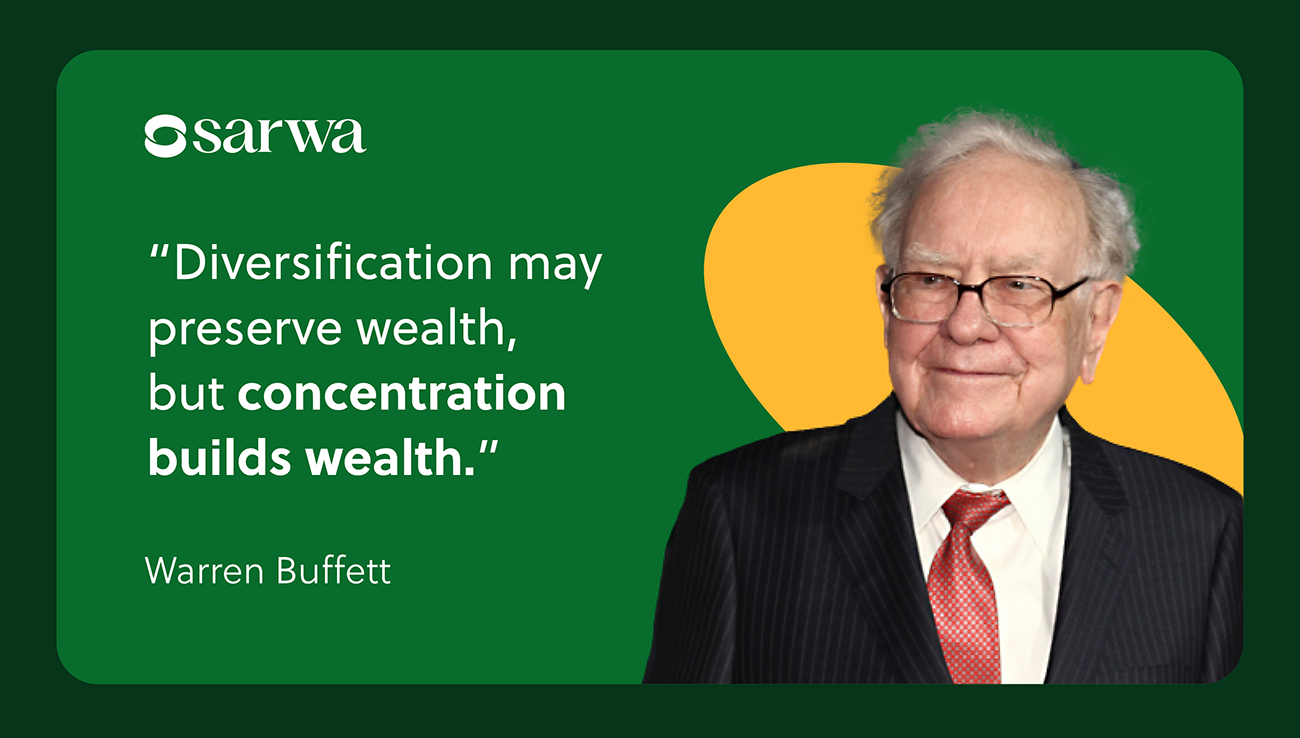
Buffett summarizes this debate: “Diversification may preserve wealth, but concentration builds wealth.”
So, what should you do?
The key is to find a balance. Don’t trade one market but don’t also trade too many markets.
There are many futures markets depending on the underlying asset – stock futures, commodity futures (gold futures, silver futures, crude oil futures, etc.), crypto futures, index futures, currencies futures, and interest rate futures – but you need to focus on a few markets with low correlation among them and develop mastery in them.
3. Have a trading plan
In one of the most contrarian sayings in the world of trading, Bill Lipschutz, a renowned Forex trader and instructor, said: “If most traders would learn to sit on their hands 50 percent of the time, they would make a lot more money.”

His point is simple: if your trading or investment strategy does not give you the go-ahead, don’t enter the market. In essence, you should have a trading strategy that tells you when to trade or not.
Futures trading is all about trying to predict future price movements. However, before you can predict future price movements, you must learn how to comprehend past and current price movements and identify patterns.
This means that you must understand technical analysis before you can know how to trade futures.
Whether you are a price action trader (focusing on candlestick and chart patterns; moving averages; support and resistance; and trendlines) or you like to combine price action with top technical indicators, you must have a clear trading plan.
With futures trading, you can enter into a long or short position or use a spread strategy (where you go long on one contract and go short on another contract, usually with different expiration dates).
Your trading plan should tell you what must happen before you go long, go short, or use a spread strategy.
In addition, your trading plan should tell you when to exit a trade. You can exit a trade when you have reached your profit target or your stop loss.
Setting a profit target will protect you from euphoria – the idea that the market will just keep moving in a favorable direction. The crash that follows euphoria is always painful and in some cases extended. Therefore, it is best to set a profit target at the time you are entering the trade.
Stop losses are also important as part of your risk management strategy (which is the next tip). But here we can make one point: set your stop loss before entering into the trade.
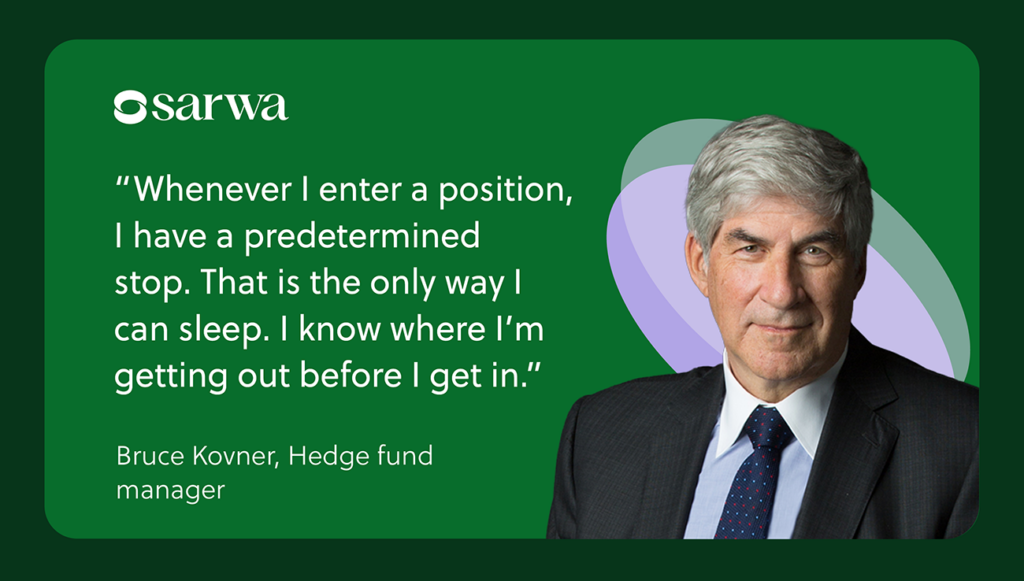
“Whenever I enter a position, I have a predetermined stop,” said Bruce Kovner, a hedge fund manager. “That is the only way I can sleep. I know where I’m getting out before I get in.”
A final point here is that you should decide on what type of trader you want to be. Day trading, swing trading, scalping, and position trading are four broad approaches you can employ.
The one you choose will determine whether you will have a short-term or long-term focus when conducting your technical analysis. For example, you will want to focus on 1-hour and 4-hour charts if you are day trading futures and daily or weekly charts if you are swing trading or position trading futures.
4. Have a risk management strategy
Having a risk management strategy is arguably the most important tip to embrace in learning how to make money trading futures.
There are two important points here: position sizing and stop loss orders.
First, position sizing. If you use all your trading capital on two or three orders and they all go south, then you can lose a large portion of your capital, if not all.
You should limit the potential loss on any trade using position sizing so that you are not wiped out by a few bad trades. In trading generally, experts advise limiting potential losses per trade to 2-5% of your capital.
For example, if you have a trading capital of $10,000, you should only spend $200-$500 on a single trade.
Similarly, you should start with a small number of contracts so you can monitor the performance of your trading strategy. Even if you use position sizing, entering too many contracts at the same time can also lead to significant losses.
Therefore, begin with a few contracts to see how your trading strategy performs, and then you can scale up if you are satisfied with the results.
Second, stop loss orders. A stop loss is a way to cut short your losses when the market goes against you (which will happen). Instead of waiting and hoping that the market will correct in your favor, you should take a little loss and exit the trade.
This is especially important for futures contracts. A future contract imposes an obligation to buy or sell at a predetermined price on a future date. If the expiry date arrives and you have not closed your position, you may be required to settle the contract through physical delivery of the underlying asset.
Waiting for the market to correct until the futures expires will only lead to more losses.
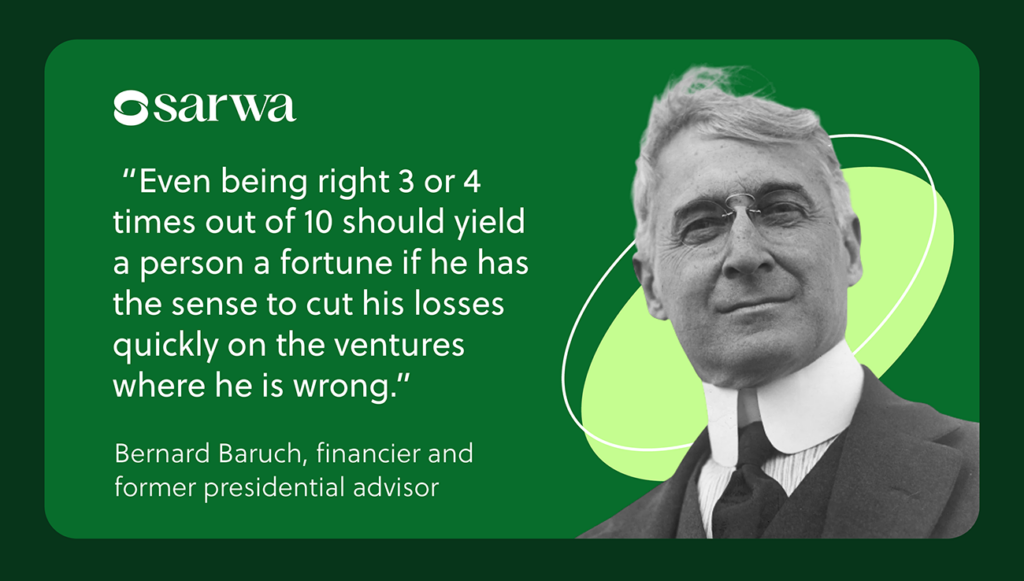
“If a speculator is correct half of the time, he is hitting a good average,” said Bernard Baruch, a financier and former presidential advisor. “Even being right 3 or 4 times out of 10 should yield a person a fortune if he has the sense to cut his losses quickly on the ventures where he is wrong.”
You can set stop losses as a percentage (“I will go out if the price moves 10% against me” for example) or do it based on your technical analysis (the previous swing low/high, 1 ATR below support level, or above resistance level are some examples).
In the futures market, you can use OTO (order-trigger-order) orders to set target profits and stop losses when you are entering a trade.
A final point: stop loss orders are a good way to avoid margin calls.
In the futures market, you only need to put down a small percentage of the contract’s value in cash (what is called margin requirement). The margin requirement is like a good-faith deposit that indicates you have the financial capacity to fulfill the contract if you hold it until expiration. It is typically between 3-12% of the contract value, according to CME Group, the Chicago-based derivatives marketplace.
If you incur too many or too significant losses, your available balance may fall below the required minimum. This will lead to a margin call – a request for more money to be deposited or for some open positions to be closed.
Setting stop losses on all your trades can significantly reduce the chances of you ever getting a margin call.
5. Have a healthy risk-return ratio
Every trader knows that there will be losing trades. However, what matters is whether profits can be larger than losses.
“It’s not whether you’re right or wrong that’s important, it’s how much money you make when you’re right and how much you lose when you’re wrong,” according to George Soros, the notable hedge fund manager.
His point is that every winning trade must yield more profit than the losses you incur on a losing trade.
The ratio of the money you make on a winning trade to the maximum amount you can lose on it (based on your position size) is also called the reward-to-risk ratio (RRR).
If you risk $1,000 (the maximum you can lose) and you expect to make $3,000 if the trade goes your way, based on your target profit, then the trade has a 3:1 reward-to-risk ratio or a 1:3 risk-to-reward ratio.
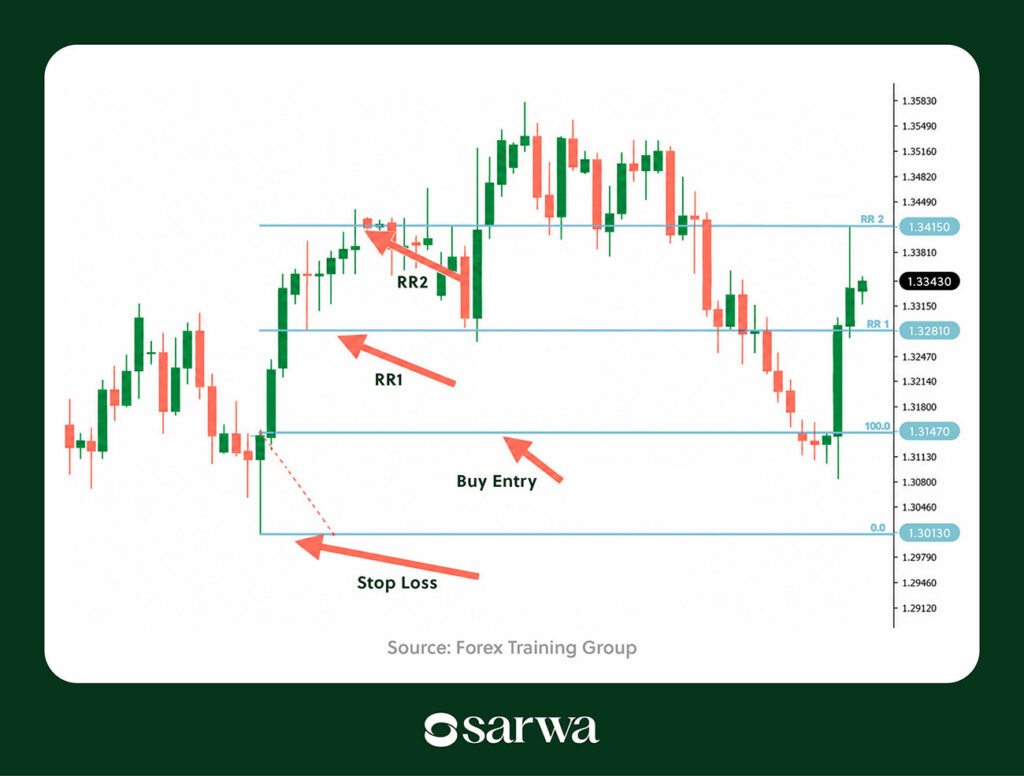
An example of a risk-reward ratio on a chart is shown below:
Source: Forex Training Group
Note that with a 1:1 RRR, the gap between the target price and the entry price is equal to the gap between the entry price and the stop loss. Here, the potential profit is equal to the maximum loss.
With the 2:1 RRR, the gap is now twice as large which means that the potential profit is two times the maximum loss.
Some traders will put the ideal RRR at 2:1 and others will insist on 3:1. Whichever one you choose, ensure you stick to it for easier trade comparison.
6. Always evaluate your trading strategies
A popular way to evaluate your trading strategy is to calculate its expectancy ratio. A positive expectancy ratio shows that the strategy is expected to be profitable over the long term (which means that you know how to make money trading futures) while a negative figure means long-term losses.
The expectancy ratio is the win percentage * average win size (average profit made from winning trades) minus the loss percentage * average loss size (average loss from losing trades).
This is one reason why a consistent RRR is important. It makes it easy to calculate the average win size and the average loss size.
What should you do if your expectancy ratio is negative?
It’s simple: modify the trading strategy or change it entirely. The modification option is open if you can identify the exact factors that make your strategy loss-making. If you are not sure of the exact issue, it’s better to opt for a different strategy.
7. Use extended trading wisely
One of the pros of futures contracts is that you can trade them outside the normal trading hours.
This is especially an advantage for traders who are experts at trading the news. Some news will come out outside the normal trading hours making it difficult to trade based on them in the spot market. Futures markets solve this problem.
However, certain problems may arise when buying futures during extended hours: lower volume, higher volatility, and larger bid-ask spreads.
“Overnight trading in the futures markets can provide potential opportunities to take advantage of news events that happen while the U.S. equity markets are closed, but it can also bring risk of lower liquidity with lower trading volume and wider bid-ask spreads,” according to Charles Schwab, a financial services firm.
Therefore, before using extended trading, ensure that the benefits exceed the costs. Don’t do it because everyone else is doing it. They may be doing it because they are very good at trading the news – which makes the benefit exceed the cost for them. If you are not as skilled, then costs may exceed benefits.
8. Stick to your strategy
If your strategy has a positive expectancy, you should stick to it. “Do more of what works and less of what doesn’t,” advised Steve Clark, a veteran trader and investor.

There is always the risk of jumping to the next big thing. Perhaps you have seen someone on YouTube with a higher winning ratio or some guys on Reddit talking about one new strategy that everyone should adopt.
Avoid the temptation to join a bandwagon when you already have something that is working well for you.
Of course, a new strategy can pique your interest. But you need to test it over a reasonable period, using a demo account, and compare its results with the old one. You should only make a switch if you have seen that the new strategy consistently outperforms over a sufficiently long period.
9. Choose the right futures trading platform
Our final tip for how to make money trading futures is selecting an appropriate futures trading platform.
The platform you use for buying futures is very important. There are four things you should look for in a futures trading platform, according to Investopedia, the financial education website:
- Intuitive to use: The futures trading platform you choose must be easy to use or learn for the average person. If only the most experienced traders can use the platform, then it has not been well designed.
Also, the user experience has to be top-notch, and customer support must be ever ready and willing to help if any problem arises.
- Multiple order types: If you can’t create OTO orders, then it will be difficult to set stop losses and profit targets. Since these two are crucial to your success, OTO orders-enablement is non-negotiable.
- Competitive fees and commissions: In this era of digitization, trading platforms must compete on fees. While low fees and commissions are not everything (focus on value for money), it is possible to provide good value at competitive fees and commissions.
- A mobile trading app: Mobile live trading is a must in this digital age.
Learning how to make money trading futures requires more than predicting market movements. It demands a solid understanding of the futures market, a well-tested trading strategy, and the discipline to manage risk when trades go against you.
Takeaways
- Gain a thorough understanding of how futures work, their pros and cons, and the strategies available.
- Focus on a few low-correlation markets to build expertise while balancing risk.
- Use position sizing and stop-loss orders to control potential losses, preventing significant capital erosion.
- Ensure your strategy has a positive expectancy and resist the urge to switch methods frequently without testing.